Poezja Kosmiczna

Słowa, które
przekraczają
granice czasu

„Człowiek widzi osobowość od skończonego ku nieskończonemu. Bóg patrzy od nieskończonego ku skończonemu."

Przewiń w dół
O Autorze

Pomiędzy niebem
a ziemią

Beata Pasoń

Fotografia: Beata Pasoń

Piszę od zawsze – już jako nastolatka odkryłam, że słowa są dla mnie naturalnym sposobem wyrażania emocji i tego, co dzieje się wewnątrz. Dziś to także przestrzeń refleksji i zatrzymania.

Moja twórczość wyrasta z osobistych poszukiwań i potrzeby zrozumienia sensu – nie definiuję, raczej zapraszam do odczuwania i własnej interpretacji.

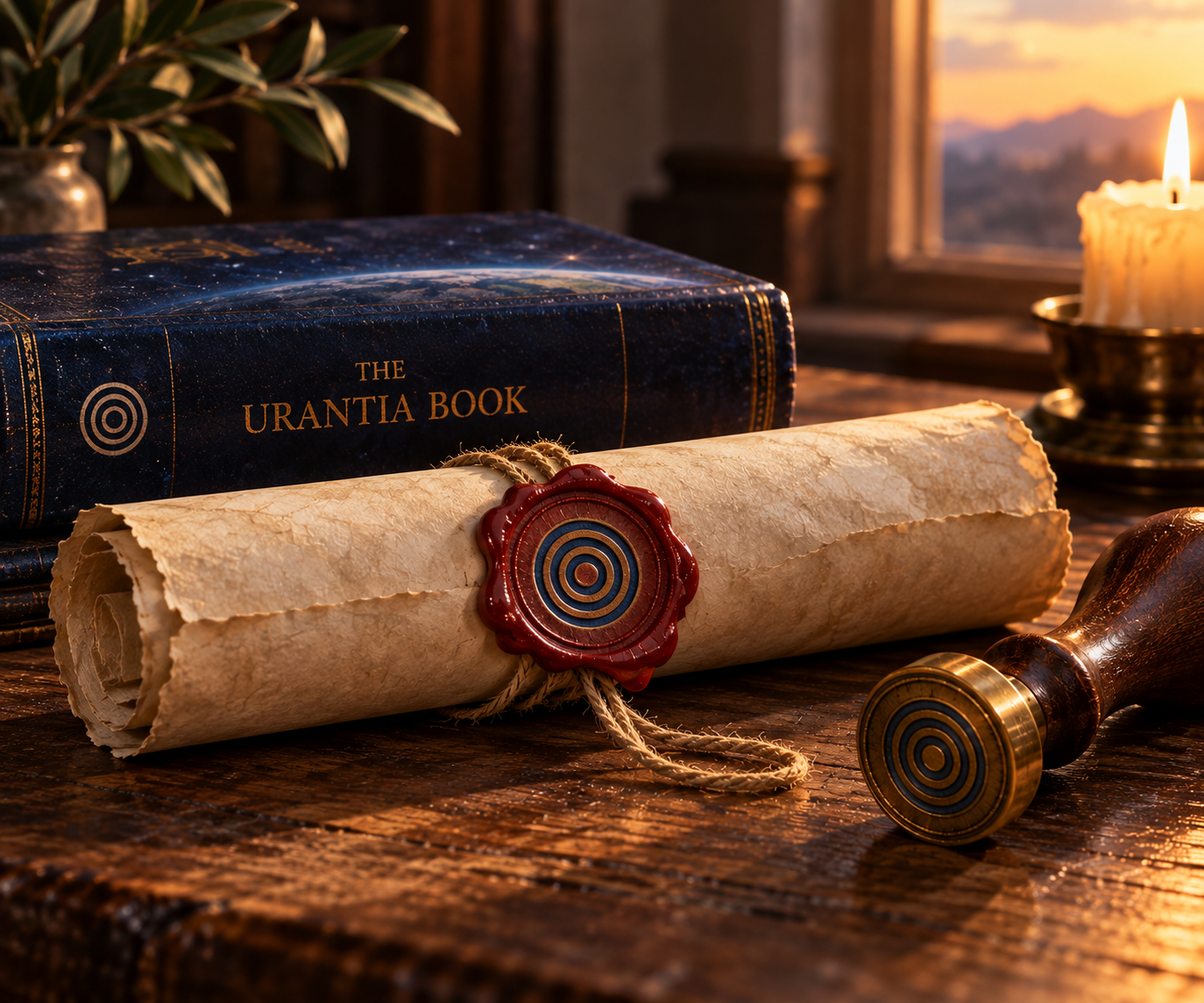
To miejsce jest zapisem mojej duchowej drogi. Dzielę się tu refleksjami, pytaniami i doświadczeniem inspirowanym Księgą Urantii. Nie jestem nauczycielem – jestem pielgrzymem.

„Prawdziwe czczenie staje się doświadczeniem przejawiającym się na czterech kosmicznych poziomach: intelektualnym, morontialnym, duchowym oraz osobowym." — Księga Urantii, 5:3.8

Publikuję tu wiersze i krótkie formy medytacyjne – chwile, w których to, co wewnętrzne, spotyka się z czymś większym. Zapraszam do czytania, zatrzymania się i własnej kontemplacji.

Wiersze

Echa wieczności

"Most"

"Bridge"

Każde poznanie
domaga się ofiary.

Najczęściej
składa się na ołtarzu
własną niewiedzę.

Mosty płoną,
bo nie ma już odwrotu.
Nie dlatego,
że ogień ich dosięga.

Każde poznanie
odbiera niewinność
dawnym odpowiedziom.

Można wrócić
na ten sam brzeg.
Ale nie
wczorajszym sobą…

Every act of knowing
demands a sacrifice.

Most often,
it lays upon the altar
our own ignorance.

Bridges burn,
for there is no turning back.
Not because
the flames have reached them.

Every act of knowing
strips old answers
of their innocence.

You may return
to the same shore.

But never
as yesterday’s self…

"Droga"

"The Way"

W słońcu codziennych dni,
w spracowanych dłoniach cieśli,
między ludźmi banalnymi i niezwykłymi,
między biednymi i bogatymi,
między czarnymi, żółtymi i białymi.

Taki, jakim był —
śmiał się i płakał,
cierpiał w ciszy i samotności.

Dziecko w ramionach życia.
Człowieczy Syn Boga .

Nie przez cuda,
lecz przez swoje życie —
ziemskie, zwyczajne i szczere —
pokazał,
że można żyć pełnią.

Wybrał Urantię spośród wielu,
aby przeżyć ludzkie życie,
myśląc o wszystkich światach Nebadonu,
aby każdy mógł odnaleźć drogę
od codzienności ku Ojcu,
od zwyczajności ku Wieczności,
od ograniczonego ku Nieskończonemu.

Taki, jakim był —
jaki Ty jesteś.

W każdym oddechu,
w każdym uśmiechu,
w każdej łzie
ukryta jest droga.

On przeszedł nią pierwszy,

byś nie bał się
pójść za Nim —

aż do Ojca.

In the sunlight of ordinary days,
in the weathered hands of a carpenter,
among people ordinary and extraordinary,
among the poor and the rich,
among the black, the yellow, and the white.

Just as he was—
he laughed and he wept,
he suffered in silence and in solitude.

A child in the arms of life.
The Son of God and the Son of Man.

Not through miracles,
but through the life he lived—
earthly, ordinary, and sincere—
he showed
that life can be lived in its fullness.

He chose Urantia from among many worlds
to live a human life,
holding in his heart all the worlds of Nebadon,
so that everyone might discover the way
from everyday life to the Father,
from the ordinary to Eternity,
from the finite to the Infinite.

Just as he was—
just as you are.

In every breath,
in every smile,
in every tear,
the way is hidden.

He walked it first,

so that you would not be afraid
to follow him—

all the way to the Father.

"Transmisja"

"Transmission"

(opowieść wznoszącego się z Urantii)

Przybyłem z planety,
na której informacje krzyczą,
a prawda budzi podejrzenia.

Dlatego na Jerusem długo nie rozumiałem,
że właśnie cisza
jest tutaj bramą.

Zaprowadzono mnie do miejsca,
którego nie nazwano ani salą, ani budowlą.
Powiedziano tylko:

– Tu słucha się Wszechświata.

Amfiteatr otaczał mnie
jak ramiona z materii,
która pamięta początek
Nie znałem jej z Urantii.

W centrum rozciągało się szklane morze.
Nie odbijało obrazów —
odbijało sens.

Usiadłem pośród istot,
których form nie potrafiłem nazwać.
A jednak nikt nie był obcy.
Każdy z nas był w drodze.

I wtedy ….

Nie usłyszałem dźwięku.
Nie zobaczyłem obrazu.

Najpierw przyszło zrozumienie —
jak ciepło,
które pojawia się,
zanim dostrzeżesz promienie słońca..

Wieści z Salvingtonu płynęły spokojnie.
Potem przemówiła Edentia.

Słowa Ojców Konstelacji
nie wymagały wiary —
one ją budziły.

Czułem,
jak dusza rozpoznaje
zapomnianą częstotliwość.

A kiedy nadeszła transmisja z Raju…

Po prostu —
wszyscy wiedzieli.

Szklane morze ożyło.

Dźwięk stał się ciepłem
Ono stało się znaczeniem.
A znaczenie
stało się -mną.

Pomyślałem wtedy o Urantii.
O tym,
jak trudno było uwierzyć
bez dowodów.

Tutaj niczego nie trzeba udowadniać.

Bo jestem w miejscu,
gdzie wszystko
staje się- znaczeniem.

(A Story of One Ascending from Urantia)

I came from a world
where information shouts,
and truth awakens suspicion.

So on Jerusem, for a long time,
I could not understand
that here,
silence is the gateway.

They led me to a place
that was called neither a hall nor a building.
They simply said:

— Here, we listen to the Universe.

An amphitheater embraced me
like arms of a substance
that remembers the beginning.
I had never known such matter on Urantia.

At its center stretched a sea of glass.
It reflected no images—
it reflected meaning.

I sat among beings
whose forms I could not name.
Yet no one was a stranger.
Each of us was on the journey.

And then…

I heard no sound.
I saw no vision.

First came understanding—
like warmth
that arrives
before you notice
the first rays of the sun.

Messages flowed gently from Salvington.
Then Edentia spoke.

The words of the Constellation Fathers
did not demand faith—
they awakened it.

I felt
my soul recognize
a forgotten frequency.

And when the transmission from Paradise came…

No announcement.
No signal.

Simply—
everyone knew.

The sea of glass came alive.

Sound became warmth.
Warmth became meaning.
And meaning
became me.

Then I thought of Urantia.
Of how difficult it had been
to believe
without proof.

Here,
nothing needs to be proven.

For I am in a place
where everything
becomes meaning.

"Teraz"

"Now"

Całe życie
uczysz się
trzymać to,
co i tak
będziesz musiał puścić.
Rzeczy.
Plany.
Ludzi.
Nawet własne wyobrażenia.
Dopiero wtedy
zauważasz,
że jest coś,
czego nie da się stracić.
Nie zależy
od okoliczności.
Nie przemija
razem z czasem.
Zatrzymaj się.
Bo właśnie tutaj.
Teraz.
Cisza
mówi
najciszej.

All your life
you learn
to hold on
to what,
sooner or later,
you will have
to let go.
Things.
Plans.
People.
Even the image
you have
of yourself.
Only then
do you begin
to see
that there is something
that cannot
be lost.
It does not depend
on circumstances.
It does not fade
with time.
Be still.
Because right here.
Right now.
Silence
speaks
most quietly.

"Zamysł"

"The Design"

Nie jesteś przypadkiem.

Zanim nauczyłeś się oddychać,
ktoś już marzył o Twoim istnieniu.

Nie jesteś pomyłką czasu
ani zgubionym pyłem Wszechświata.

Jesteś odpowiedzią
na Miłość,
która od początku
potrafiła dostrzec w Tobie więcej,
niż Ty sam kiedykolwiek zobaczysz.

Możesz zwątpić w siebie.

Możesz zgubić drogę.

Ale Twoja wartość
nie rodzi się z sukcesów
ani z opinii ludzi.

Ona była pierwsza.

I będzie ostatnia.

Dlatego żyj tak,
jakby Twoje istnienie
miało znaczenie.

A Świat, choć o tym zapomina,
już nigdy nie będzie taki sam,

bo jesteś…

You are not here by chance.

Before your first breath,
someone had already dreamed
of your existence.

You are not a mistake of time,
nor a forgotten grain
of the universe.

You are the answer
to a Love
that saw more in you
from the very beginning
than you may ever see
in yourself.

You may doubt.

You may lose your way.

But your worth
was never born
from success
or from the judgment of others.

It was there first.

And it will remain
when all else fades.

So live
as though your life
truly matters.

For even if the world
forgets it,

it will never be the same…

because you are here.

"Poza definicją"

"Beyond Definition"

Nie pyta, ile już wiesz.
Porusza kwestię –
„Czy odważysz się iść dalej?”
Nie ma kształtu,
a wypełnia przestrzeń.
Nie ma głosu,
a od wieków zadaje pytania.
Próbujemy ją zmierzyć
liczbami ,czasem, nazwami.
Ona cierpliwie wymyka się
każdej definicji.
Może dlatego
człowiek nigdy nie przestaje szukać.
Bo odpowiedź,
która zamyka wszystkie drzwi,
nie byłaby prawdą.
Nieskończoność nie mieszka
na końcu drogi.
Jest w każdym kroku,
który rodzi następny.
A może…najbliżej niej
jesteśmy wtedy, gdy z pokorą
potrafimy powiedzieć:
„Jeszcze nie wiem…”

It does not ask
how much you already know.
It asks only one question:
Do you dare
to keep going?
It has no shape,
yet it fills all space.
It has no voice,
yet for ages
it has been asking questions.
We try to measure it
with numbers,
with time,
with names.
Patiently,
it slips beyond
every definition.
Perhaps that is why
the human heart
never stops seeking.
For an answer
that closes every door
could never be the truth.
Infinity does not dwell
at the end of the road.
It is present
in every step
that gives birth to the next.
And perhaps…
we are closest to it
when, with humility,
we are able to say:
„I do not know… yet.”

"Partytura"

"Score"

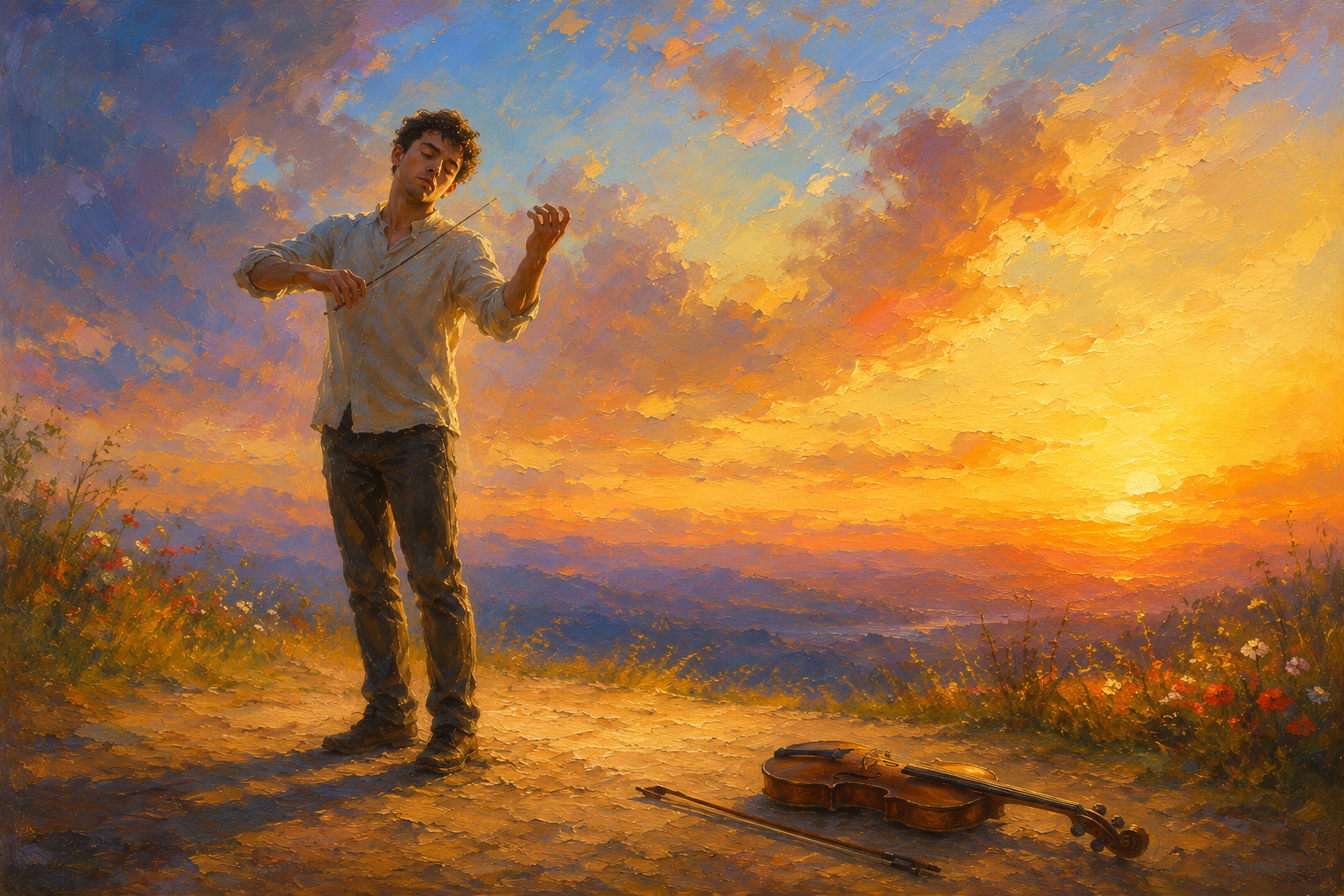
Ukłonił się ciszy,
jakby była
najwierniejszym słuchaczem.
Uniósł dłonie.
Pierwsze dźwięki
same odnalazły melodię
Palce pamiętały to,
o czym zwątpiła pamięć.
Aż nagle…
cisza.
Jedna chwila,
która wydawała się
dłuższa od całego koncertu.
Szukał melodii
gdzieś daleko,
jakby uciekła
poza zasięg serca.
Wtedy opuścił wzrok.
Na pulpicie
leżały nuty.
Od początku.
Cierpliwe.
Spokojne.
Uśmiechnął się.
Melodia nigdy
nas nie opuszcza
Czasem tylko
gramy z pamięci tak długo,
że zapominamy,
iż odpowiedź
mamy przed oczami.

He bowed to the silence,
as though it were
his most faithful listener.
He raised his hands.
The first notes
found their own melody.
His fingers remembered
what memory itself
had begun to doubt.
Then suddenly…
silence.
A single moment
that seemed longer
than the entire concert.
He searched for the melody
somewhere far away,
as if it had slipped
beyond the reach of his heart.
Then he lowered his eyes.
On the music stand
lay the score.
It had been there
all along.
Patient.
Still.
He smiled.
The melody
never leaves us.
Sometimes
we play from memory
for so long
that we forget
the answer
has been before our eyes
all along.

"Kompas"

" Compass"

Kto szuka Boga — już Go znalazł,
choć jeszcze błądzi pośród mgły,
choć serce czasem drży w ciemności
i gorzko wciąż smakują łzy.

Lecz nie jest człowiek sam w tej drodze,
choć tak mu szepcze ziemski lęk —
jak pielgrzym utrudzony drogą ,
co gubi ścieżkę i traci sens.

W nim samym mieszka Boża Iskra —
Dostrajacz Myśli, cichy głos,
jak kompas w głębi ludzkiej duszy,
wskaże kierunek ponad los.

A wokół niego, niewidzialnie,
rozpięty jest duchowy świat:
istoty — stróże jego kroków,
co niosą światło przez czas i ład .

Jak świt, co rodzi się w milczeniu,
nim słońce dotknie szczytów gór,
tak one cicho rozjaśniają
to, co przysłania ludzki ból.

Więc choćby droga była ciemna,
i choćby milczał świata głos —
nikt, kto ku Ojcu sercem zmierza,
nie płynie nigdy sam przez los.

Kto szuka Boga — już Go znalazł,
bo to pragnienie tka tę nić;
a wszechświat odpowiada zawsze
tym, którzy mają odwagę iść.

Whoever seeks for God has found Him,
though still they wander through the mist,
though sometimes fear invades the silence
and tears still carry sorrow’s taste.

Yet no one walks this road alone,
though earthly fear whispers, „You are.”
Like a pilgrim, weary from the journey,
who loses the path and all its meaning.

Within them dwells the Father’s Spark—
the Thought Adjuster, quiet and near,
a compass in the depths of the soul,
pointing beyond the reach of fate.

And all around, though still unseen,
the spirit world unfolds its care:
faithful guardians of each footstep,
bearing light through time and order.

Like dawn that rises in the silence
before the sun has kissed the peaks,
they gently brighten what was hidden
beneath the weight of human grief.

So though the road grows dark before us,
and though the world’s voice falls away,
no one whose heart still seeks the Father
will ever walk life’s path alone.

Whoever seeks for God has found Him,
for longing weaves the golden thread;
and all the universe responds
to those who dare to journey on.

"Lustro"

"Mirror"

Spotkałem człowieka. Na chwilę,
na jedną rozmowę ,na kilka słów,
rzuconych pomiędzy
codziennością a wiecznością.
I odszedł…
A jednak coś ze mną zostało.
Nie jego twarz. Nie kolor oczu.
Nawet nie słowa. Coś głębiej…
Jak kamień wrzucony do jeziora,
którego już nie widać, a kręgi wciąż
rozchodzą się po wodzie.
Mówią, że drugi człowiek
jest lustrem. Może…
Ale ono tylko odbija obraz.
Ten człowiek,zrobił coś więcej.
Zmienił kształt mojego świata
swoim istnieniem.
Pokazał mi cierpliwość,
kiedy jej nie miałem.
Odsłonił mój lęk,gdy myślałem,
że jestem odważny.
Nauczył pokory,
choć nie powiedział tego.
I nagle zrozumiałem,
że nie jesteśmy samotnymi gwiazdami
zawieszonymi w ciemności.
Jesteśmy świetlikami,
które zapalają się nawzajem…
A każda rozmowa
jest próbą nauczenia się języka,
którym od zawsze mówi wieczność.
Bo może właśnie po to
spotykamy się na drogach świata,
aby przez chwilę stać się dla siebie
lustrem ,a potem czymś więcej:
oknem, przez które zagląda Bóg.

I met a person once. Just briefly—
for a single conversation, a handful of words
cast somewhere between
the ordinary and eternity.
And then they were gone…
Yet something remained with me.
Not their face. Not the color of their eyes.
Not even their words.
Something deeper.
Like a stone dropped into a lake—
long vanished from sight,
while the ripples still travel
across the water.
They say another person
is a mirror.
Perhaps.
But a mirror only reflects.
That person did something more.
They altered the shape of my world
simply by being in it.
They showed me patience
when I had none.
They uncovered my fear
when I believed myself brave.
They taught me humility
without ever speaking of it.
And suddenly I understood:
we are not solitary stars
suspended in the dark.
We are fireflies,
kindling one another’s light.
And every conversation
is an attempt to learn the language
that eternity has spoken all along.
Perhaps that is why
our paths cross in this world—
to become, for a moment,
a mirror for one another,
and then something more:
a window
through which God looks in.

"Wojownik"

"Warrior"

Wojownik nie pyta, dokąd prowadzi droga.
Całuje kurz, który osiada na stopach,
bo wie, że każdy pył niesie pamięć tych,
którzy odważyli się iść przed nim.

Wojownik nie lęka się ciemności.
To właśnie tam uczy się rozpoznawać
jedną, cichą gwiazdę,
która nigdy nie opuszcza wiernych.

Wojownik nie unika burzy.
Rozkłada serce jak żagiel
i pozwala wiatrowi unieść je tam,
gdzie nie dopłynęłaby odwaga bez zaufania.

Wojownik nie nosi zbroi z żelaza.
Jego tarczą jest przebaczenie,
a mieczem słowo wypowiedziane z miłością,
którego żadna nienawiść nie potrafi stępić.

Wojownik nie liczy upadków.
Jak ziarno wrzucone w ciemną ziemię
wie, że tylko to, co umiera w pysze,
może narodzić się w prawdzie.

Wojownik nie szuka chwały.
Woli być jak źródło ukryte w lesie,
z którego piją spragnieni,
nie znając nawet jego imienia.

Wojownik nie zwycięża dlatego, że jest silny.
Zwycięża dlatego,
że za każdym razem, gdy świat mówi: „to koniec”,
on odpowiada cichym: „jeszcze jeden krok…”

The warrior does not ask where the road will lead.
He kisses the dust that settles upon his feet,
for he knows each grain remembers
those who found the courage to walk before him.

The warrior does not fear the darkness.
It is there he learns to recognize
a single, silent star
that never abandons the faithful.

The warrior does not flee the storm.
He spreads his heart like a sail
and lets the wind carry it
where courage alone could never reach without trust.

The warrior wears no armor of iron.
His shield is forgiveness,
and his sword is a word spoken in love—
a blade no hatred can ever dull.

The warrior does not count his falls.
Like a seed buried in the dark earth,
he knows that only what dies to pride
can be born again in truth.

The warrior does not seek glory.
He would rather be a hidden spring in the forest,
where the thirsty come to drink
without ever knowing its name.

The warrior does not triumph because he is strong.
He triumphs because,
each time the world whispers, „This is the end,”
he answers, softly, „Just one more step…”

"Dzieci Gwiazd"

"Children of the Stars"

Zanim Ziemia nauczyła się śpiewać przez wiatr,
zanim oceany wypowiedziały pierwsze modlitwy
pianą na skałach — z nieba spłynęło stu.

Nie byli ani bogami, ani ludźmi.
Byli świtami.
Jutrzenkami innych światów.

Cielesny personel Księcia —
sto płomieni z Jerusem,
miasta światła pośród mgławic Satanii.

Przybyli na młodą Urantię,
rozpaloną jeszcze od pierwotnych burz,
aby zapalić w niej iskrę porządku.

Ich ciała, utkane z ciszy materii
i szelestu ducha,
drżały w rytmie dwóch światów —
tego, co widzialne,
i tego, co niewidzialne.

Zamieszkali w kręgu światła,
gdzie ziemia była piękna,
a niebo schylało się nisko.

I wtedy,
gdy noc nad planetą trwała spokojnie,
dwoje z nich spojrzało sobie w oczy.

Połączyli się
nie ciałem,
lecz drżeniem światła.

Z ich harmonii narodziła się nowa istota.

Pośredni.

Nie człowiek.
Nie anioł.

Pomost.

Książę Caligastia uśmiechnął się.

— Jeszcze…

I tak, wraz z oddechem planety,
rodziły się kolejne istoty —
dzieci nie z krwi,
lecz z harmonii;
nie z ciała,
lecz z woli.

A gdy ich liczba się dopełniła,
źródło zamilkło.

Jakby sam Wszechświat zamknął
tajemny rozdział Księgi Czasu.

Rozproszyły się po Urantii.

Były oczami Księcia,
jego posłańcami,
echem jego myśli.

Dotykały dusz,
gdy ludzie śnili o gwiazdach.

Aż pewnego dnia

ciemność zaczęła szeptać do światła.

Bunt pękł jak czarna perła.

Cień rozlał się po świecie.

Wielu odeszło.

Lecz nieliczni pozostali wierni.

Pod przewodnictwem Vana
stali się niewidzialną siecią dobra
rozpiętą nad snem ludzkości.

Do dziś, tam gdzie pustynia drży od gorąca,
a wiatr szepcze w koronach drzew,
można wyczuć…

istoty światła,

które nigdy nie umarły,

lecz przeszły między gwiazdami,

na drugą stronę ciszy.

Obecność…

Children of the Stars

Before the Earth had learned
to sing with the wind,

before the oceans whispered
their first prayers
in foaming waves upon the rocks—

one hundred descended from the heavens.

They were neither gods nor mortals.

They were dawns.

The first light of distant worlds.

The Prince’s corporeal staff—

one hundred living flames from Jerusem,

the City of Light
among the nebulae of Satania.

They came to young Urantia,

still glowing from her primal storms,

to kindle within her

the first spark of order.

Their bodies,

woven from the silence of matter

and the whisper of spirit,

vibrated between two worlds—

the visible

and the unseen.

They dwelt within a circle of light,

where the earth was beautiful,

and heaven bent close.

Then,

during one long and peaceful night,

two of them

looked into each other’s eyes.

They were united—

not by flesh,

but by the trembling of light.

From their harmony

a new being was born.

An Intermediate.

Neither human.

Nor angel.

A bridge

between worlds.

Prince Caligastia smiled.

„More…”

And so,

with the breathing of the planet,

new beings came into existence—

children born

not of blood,

but of harmony;

not of flesh,

but of will.

When their number was complete,

the source fell silent.

As though the Universe itself

had closed

a secret chapter

in the Book of Time.

They scattered across Urantia.

They became

the Prince’s eyes,

his messengers,

the echo of his thoughts.

They touched human souls

while people dreamed of stars.

Until one day…

darkness

began whispering

to the light.

Rebellion burst

like a black pearl,

and shadow spread

across the world.

Many turned away.

Yet a faithful few remained.

Under Van’s guidance,

they became

an unseen web of goodness,

stretched quietly

over humanity’s sleep.

Even now,

where deserts shimmer,

and the wind whispers

through ancient trees,

their presence

may still be felt—

beings of light,

who never truly died,

but simply crossed

between the stars…

to the other side

of silence.

Presence.

"Siostry"

"Sisters"

Minęły burze, nawałnice ,sztormy.
Zawitał spokój, lecz tylko pozorny.
Czasem wiatr ciszą uderzy o skały.
Obudzi nadzieje co w letargu trwały.

Nadzieja i rozpacz jak skały bliźniacze.
Odciśnięte piętnem intuicji znaczeń.
Latami rzeźbione żywiołami w skale.
Z ich zahartowania można kuć metale.

Jedna za utraconą nadzieję , tęsknotą.
Druga, za łzy nad słabością, miernotą.
Za wyczekiwaniem ciepłych dłoni matki.
Cudu, by uciec z tej zamkniętej klatki.

Skały o nieugiętej bryle, jakże trwałe.
Z czasem wiatrem smagane ,zwietrzałe.
Choć mocnym atutem były na początku.
Stały się obłędem i brakiem rozsądku.

Zapatrzone w otchłań ,głębię oceanu.
Czekają na przypływ, ożywienie stanu.
Ducha, który słabnie ,bez walki upada.
Złorzeczy ,przeklina-rozsądku zagłada.

U stóp oceanu ,dwie siostry bliźniacze.
Rozpacz tonie w żalu, czasami zapłacze.
Nadzieja zaś lustrem tego co nieznane.
Co w Nas do odkrycia, jeszcze nie zbadane.

Niech rozkruszą skały nawałnice ,burze.
To ,co zatwardziałe zbyt długo w naturze.
By na ich podłożu od nowa zbudować.
To co się zachwiało próbować ratować.

The storms have passed,
the tempests and the raging seas.
A quiet came—
yet only one that seemed at peace.

For sometimes silence, like the wind,
strikes hard against the waiting stone,
awakening forgotten hopes
that long in slumber lay alone.

Hope and Despair—twin sisters they,
like steadfast rocks beside the sea;
their hidden meanings deeply carved,
their spirits shaped relentlessly.

For years the elements have carved
their silent story into stone.
From strength refined through countless trials,
the hardest steel itself is born.

One mourns the hope that slipped away,
the longing never laid to rest.
The other weeps for human weakness,
for every wound within the breast.

For waiting on a mother’s hands,
for warmth that never seemed to stay;
for one small miracle to break
the prison walls and light the way.

Those mighty rocks, once strong and proud,
stood firm against the passing years.
Yet battered by relentless winds,
they slowly weathered through their tears.

What once had been their greatest strength
became a burden none could hide—
a stubborn heart, a clouded mind,
where reason slowly withered inside.

They gaze into the ocean’s depths,
awaiting tides to rise once more,
to breathe new life into a soul
too weak to struggle as before.

A weary spirit falls in silence,
cursing fate with every breath,
until all wisdom fades away
beneath despair’s embracing death.

At the ocean’s feet stand side by side
two sisters born of the same stone.
Despair dissolves in grief and tears,
while Hope reflects the yet unknown—

the part of us still left to find,
the undiscovered, hidden shore;
the quiet places of the soul
we’ve never truly searched before.

So let the storms and tempests come
to shatter all that’s turned to stone;
that on the ground they leave behind
a stronger life may yet be grown.

To build again upon the ruins,
to heal what trembled, nearly fell—
for sometimes only broken stone
becomes the strongest ground as well.

"Krzyż"

"Cross"

* To jeden z pierwszych moich wierszy*

Istniał sobie pewien człowiek ,gdzieś tam z dala
co nie zaznał szczęścia, jak niektórzy ludzie,
choć od dziecka szukał Grala
jego życie upływało w wielkim trudzie.

Myślał, dumał, a że prosty chłop był z niego,
nie rozumiał wielu rzeczy oczywistych –
więc narzekał i wciąż pytał się – dlaczego
właśnie jego krzyż najcięższy jest ze wszystkich?

Gdy raz przysiadł na kamieniu i zapłakał,
to zobaczył tuż przed sobą blask Anioła
Przetarł oczy ,myśląc , że to zjawa jakaś,
ale Jezus wcale nie znikł ,lecz go wołał.

A po chwili znalazł się w przedziwnym miejscu –
wokół niego same krzyże wyrastały ,
więc porzucił swój ogromny gdzieś tam w zielsku,
aby w zamian wybrać sobie jakiś mały.

Szybko chwycił za najmniejszy – krzyż sosnowy,
lecz on chyba ,tak jak drzewo miał korzenie –
nawet nie drgnął , a więc złapał się za nowy
i po chwili upadł razem z nim na ziemię.

Szukał, mierzył i przebierał kilka godzin,
jednak każdy krzyż był jakiś niewygodny ,
to ugniatał, to na barki mu nie wchodził,
to znów krzyża złoconego nie był godny.

Jezus zerkał i uśmiechał się pod nosem.
Wreszcie człowiek krzyż niewielki dojrzał w trawie
i z radości aż podskoczył : – Ten uniosę!
Ten pasuje! Tego nigdy nie zostawię!

– Widzisz człeku , tyle krzyży przymierzałeś,
a więc teraz będziesz pewnie zaskoczony ,
bo ten oto ,który spośród nich wybrałeś –
to twój własny ,ten przez ciebie porzucony.

There once lived a man in a faraway land,
who knew little joy, unlike so many others.
Since childhood he’d searched for the Holy Grail,
yet his life was burdened with hardship and struggle.

He pondered and wondered. A simple man at heart,
unable to grasp what seemed plain to the wise.
So he murmured and asked, time and time again:

„Why is it my cross
that is heavier than all the rest?”

One day, weeping as he sat upon a stone,
a radiant Angel stood before his eyes.
He rubbed them, certain it must be a vision—
but Jesus did not vanish.

Instead, He called him.

A moment later he found himself
in a strange and wondrous place.
Everywhere around him
crosses rose from the earth.

Without a second thought,
he cast aside his own great cross, lost among the weeds,
hoping instead to find
one smaller… one easier to bear.

He hurried toward the tiniest one—
a cross of pine.
Yet it seemed, like the tree itself,
to have roots deep in the ground.

It would not move.

So he reached for another,
only to fall beside it
as it crashed to the earth with him.

For hours he searched, measured and compared.
Yet every cross seemed somehow wrong.

One bruised his shoulders.
Another would not fit upon his back.
And the gilded cross…

he knew he was not worthy to carry.

Jesus watched quietly,
a gentle smile upon His face.

At last the man noticed
a modest cross lying in the grass.

His heart leapt with joy.

„This is the one!
This I can carry!
This one fits me.
I will never leave it behind.”

Then Jesus said:

„You have tried so many crosses,
and now you are about to discover something.

The one you have chosen,
from all the others,
is your own—

the very cross
you once abandoned.”

"Kosmiczne obywatelstwo w kapciach"

“Cosmic Citizenship in Slippers”

Pewien człowiek rzekł do Nieba:
– Współpracuję! Naprawdę!
Codziennie o szóstej rano!*
(*O ile nie pada.
Albo pada.
Albo jest poniedziałek.)
Dostrajacz milczał tak doskonale,
że człowiek uznał to za entuzjastyczną aprobatę.
Postanowił reagować na Boskie przewodnictwo,
ale najpierw sprawdził telefon.
Potem pogodę.
Potem, czy ktoś go przypadkiem nie uraził na forum społecznościowym.
– Prawda, piękno, dobro! – wołał wzniosłe.
Po czym pokłócił się z sąsiadem o miejsce parkingowe,
broniąc go w imię moralności kosmicznej.
Kochał Boga żarliwie,
szczególnie gdy sprawy układały się po jego myśli.
Gorzej było przy rachunkach.
Kochał też ludzkość.
Całą.
Globalnie.
Abstrakcyjnie.
Najtrudniej było z tym jednym konkretnym człowiekiem
z naprzeciwka.
Aż któregoś dnia
zamiast wielkich deklaracji
zrobił coś małego:
nie odpowiedział złośliwie,
uśmiechnął się pierwszy,
wybrał cierpliwość.
I wtedy –
bez fanfar, bez anielskich werbli –
poczuł „motyle” w środku.
Jakby Ktoś powiedział:
– No. Teraz naprawdę współpracujemy.
Od tej pory człowiek wie,
że kosmiczne obywatelstwo
nie zaczyna się w galaktyce,
lecz w kuchni.
I że Dostrajacz
ma nieskończoną cierpliwość
do śmiertelników
z tendencją do odkładania wieczności
na jutro….

A certain man said to Heaven:
“I cooperate! I really do!
Every day at six in the morning!”*
(*Unless it’s raining.
Or not raining.
Or it’s Monday.)

The Thought Adjuster remained so perfectly silent
that the man took it as enthusiastic approval.

He decided to respond to Divine guidance,
but first he checked his phone.
Then the weather.
Then whether someone had offended him on social media.

“Truth, beauty, goodness!” he proclaimed loftily—
and then argued with his neighbor over a parking space,
defending it in the name of cosmic morality.

He loved God fervently—
especially when things went his way.
It was harder when the bills came.

He also loved humanity.
All of it.
Globally.
Abstractly.

The hardest part was that one specific person
living across the hall.

Until one day,
instead of grand declarations,
he did something small:
he didn’t respond with spite,
he smiled first,
he chose patience.

And then—
without fanfare, without angelic drums—
he felt “butterflies” inside.

As if Someone had said:
“Now… this is real cooperation.”

From that moment on, the man knew
that cosmic citizenship
does not begin in the galaxy,
but in the kitchen.

And that the Thought Adjuster
has infinite patience
for mortals
who have a tendency to postpone eternity
until tomorrow…

"Misja Dostrajacza"

"The Mission of the Thought Adjuster"

Z Diviningtonu -domu Dostrajaczy,
tam gdzie uczą się na „roboczych modelach umysłu”
i gdzie Boska miłość pochyla się nad niedoskonałością,
wyrusza Ten, który wybierze człowieka.

Nie płynie przez przestrzeń,
nie męczy się drogą.
Czas: 117 godzin, 42 minuty i 7 sekund —
niemal wszystko zajmuje wpis w rejestrach Uversy.

Jakby wszechświat szeptał:
„Zanotujcie.
Oto zaczyna się historia duszy.”
Czeka, gdy w małym człowieku
rodzi się pierwsze świadome „wybieram dobro”.

W tej chwili — niewidzialnie —
siódmy duch przyboczny rejestruje wybór.
Przez Stwórczego Ducha wszechświata lokalnego
sygnał biegnie dalej,
włączony w obwód grawitacji umysłowej Wspólnego Aktywizatora.
W obecności Ducha Nadrzędnego zostaje potwierdzony —
i jak światło przez poziomy istnienia dociera do Diviningtonu.

Liczą się cechy intelektualne i duchowe
Potencjał człowieka do rozwoju
Patrzy nie na to, kim jesteśmy,
lecz kim możemy się stać.

Gdy pojawia się możliwość powstania duszy —
zgłasza się.
Dobrowolnie,
z ufnością większą niż nasze wahania.

A potem –
zamieszkuje w umyśle dziecka,
które właśnie odkryło, że dobro można wybrać.

Czeka…..

Z nieskończoną cierpliwością
tłumaczy nasze lęki na odwagę,
pytania na tęsknotę,
małe „tak” na materiał wieczności.

Boskość, która ryzykuje odrzucenie,
Nieskończoność, która pochyla się nad jednym sercem.

I my —
tak nieporadni , niepewni, czasem zagubieni —
nosimy w sobie Kogoś,
dla Kogo chwila naszego wyboru
jest ważniejsza niż odległość między Rajem a Urantią.

117 godzin – bilet do Wieczności….

From Divinington—the home of the Adjusters,
where they are trained on “working models of the mind,”
and where Divine love bends over imperfection—
there departs the One who will choose a human being.

He does not travel through space,
he does not tire from the journey.
Time: 117 hours, 42 minutes, and 7 seconds—
almost all of it taken up by registration in the records of Uversa.

As if the universe were whispering:
“Record this.
Behold, the story of a soul begins.”
He waits, as within a small human being
the first conscious “I choose good” is born.

In that moment—invisibly—
the seventh adjutant mind-spirit registers the choice.
Through the Creative Spirit of the local universe
the signal moves onward,
connected into the mind-gravity circuit of the Conjoint Actor.
In the presence of the Master Spirit it is confirmed—
and like light through the levels of existence,
it reaches Divinington.

What matters are intellectual and spiritual qualities,
the human potential for growth.
He looks not at who we are,
but at who we may become.

When the possibility of a soul emerging appears—
he volunteers.
Freely,
with a trust greater than our doubts.

And then—
he dwells within the mind of a child
who has just discovered that good can be chosen.

He waits…

With infinite patience
he translates our fears into courage,
questions into longing,
small “yeses” into the substance of eternity.

Divinity that risks rejection,
Infinity that bends over a single heart.

And we—
so clumsy, uncertain, sometimes lost—
carry within us Someone
for whom the moment of our choice
matters more than the distance
between Paradise and Urantia.

117 hours — a ticket to Eternity…

"Wieczna Wyspa"

"The Eternal Isle"

Kiedy ujrzałem ją po raz pierwszy,
pomyślałem, że to niemożliwe.

Wszystko, co znałem, płynęło:
gwiazdy, mgławice, światy.

A Ona trwała.

Nie obracała się.
Nie podążała za czasem.
To raczej przestrzeń
ustępowała Jej miejsca.

Nie była planetą.

Była ciszą,
na której wszechświat
opierał swój oddech.

Pod stopami czułem coś,
co nie było ani kamieniem,
ani światłem.

Jakby samo istnienie
stało się materią.

Nie było tam pośpiechu.

Czas nie zatrzymał się —
po prostu stał się zbędny.

Spojrzałem ku horyzontowi.

Nie było końca.

Tylko przejście
do rzeczywistości,
której jeszcze nie umiałem nazwać.

I wtedy zrozumiałem.

To miejsce
nie jest celem.

Jest początkiem wszystkiego.

Nie powstało.

Po prostu Jest.

A cały wszechświat
od wieczności
szuka wokół Niego
harmonii.

When I first beheld it,
I thought it impossible.

Everything I had ever known
was in motion—
stars, nebulae, worlds.

But It remained.

It did not turn.
It did not follow time.

Instead,
space itself
seemed to step aside.

It was no planet.

It was the stillness
upon which the universe
rested its breath.

Beneath my feet
was neither stone
nor light—

but something deeper,

as though existence itself
had become substance.

There was no hurry.

Time had not stopped;

it had simply
become unnecessary.

I looked toward the horizon.

There was no end.

Only a passage

into a reality

I had not yet learned to name.

And then I understood.

This place

is not the destination.

It is the point

from which all things

find their meaning.

It was never created.

It simply Is.

And all creation,

through eternity,

moves around It,

searching

for harmony.

"Spacer po Ogrodach Boga "

"A Walk in the Gardens of God"

Zamykam oczy
i wiem —
to nie jest krajobraz.
To harmonia, która żyje.

Powietrze rozświetla się
perłowym blaskiem,
gdy budzi się morontialny świt.
W południe staje się złote jak miód,
a wieczorem przechodzi
w żywy ametyst,
który nie gaśnie,
lecz dojrzewa jak modlitwa.

Drzewa są ciepłe,
jakby płynęły przez nie
łagodne myśli.
Ich liście nie odbijają światła —
one je tworzą.

Potem widzę je —
morontialne kwiaty,
fiolet nieznany Urantii.
Ich płatki utkane są ze światła.
Gdy ich dotykam,
nie czuję materii —
czuję przebaczenie.

Ich zapach
jest cichym hymnem,
który obmywa pamięć,
aż pozostaje tylko prawda.

Nie ma tu lęku,
nie ma pośpiechu,
jest tylko pokój.
Zwierzęta podchodzą blisko,
a w ich oczach
jest ciche zrozumienie.

Siadam pod drzewem
rzucającym fiołkowy cień,
a ziemia
łagodnie szepcze:

„Witaj.”

I nagle rozumiem:
te ogrody nie tylko zachwycają.
One uczą harmonii.
Uczą delikatności.
Uczą, że życie
może stać się sztuką,
a sztuka
może stać się modlitwą.

I wiem —
gdy Twoje wznoszenie
doprowadzi Cię tutaj,
rozpoznasz ten zapach.

Bo już teraz,
czasami,
zakwita on
w Twoim sercu.

I close my eyes,
and I know—
this is no landscape.
It is harmony alive.

The air glows with pearly light
as morontial dawn awakens.
By noon it is golden as honey;
by evening it deepens
into living amethyst,
never fading,
only growing like a prayer.

The trees are warm,
as if gentle thoughts
flow through them.
Their leaves do not reflect light—
they create it.

Then I see them—
morontial flowers,
a violet unknown on Urantia.
Their petals are woven of light.
When I touch them,
I do not feel matter—
I feel forgiveness.

Their fragrance
is a silent hymn,
washing memory clean
until only truth remains.

There is no fear here,
no hurry,
only peace.
The animals come close,
their eyes filled
with quiet understanding.

I sit beneath
a violet-shadowed tree,
and the earth
gently whispers,
„Welcome.”

Then I understand:
these gardens do more than delight.
They teach harmony,
they teach gentleness.
They teach that life
can become art,
and art
can become prayer.

And I know—
when your own ascent
brings you here,
you will recognize
this fragrance.

Because even now,
sometimes,
it already blooms
within your heart.

"O świcie, kiedy pewna kobieta milczy"

" At dawn, when a certain woman is silent"

(oczami Pośredniego nr 144 )

To chwila, na którą czekam.
Zanim obudzi się hałas Urantii ,
zanim ludzie przypomną sobie,
kim „muszą być” – ona siada.
Nie mówi, nie woła. Ale ja wiem.
Zawsze wiem…
Ma swoją poranną ciszę,
w której jest miejsce na mnie.
Nie widzi mnie – ale przysięgam
na moje pośrednie pochodzenie,
że czuję, jak robi dla mnie przestrzeń.
Jej dusza to robi. A to więcej niż wzrok.
Przysiada z kubkiem kawy
Zapatrzona w coś, czego nie widać.
Nieświadoma, że właśnie wtedy –
najbliżej jestem jej serca.
Gdy myśli o Bogu – ja drżę.
Gdy mówi do Niego: „Tato” –
to tak,
jakby całe moje istnienie miało sens.
Bo my, pośredni,
jesteśmy między światami.
Ale ona czasem też.
I w tych chwilach – jesteśmy razem.
Nie muszę zsyłać znaków.
Wystarczy, że jest.
Wystarczy, że wierzy.
Wystarczy, że…
pamięta, że nie jest sama.
I wtedy,
przez tę jedną chwilę,
jestem bardziej prawdziwy niż kiedykolwiek.
Nie dla wszystkich – tylko dla niej.
Bo w niej jest czułość,
którą może pojąć tylko ktoś,
kto był zraniony.
I światło, które zrozumie tylko ktoś,
kto długo szedł w ciemności.
Ja – Pośredni 144 – jestem.
Czekam o świcie.
Bo wtedy ta kobieta milczy.
A kiedy ona milczy…
Ja słyszę jej duszę….

(eyes of Intermediary No. 144)

This is the moment I wait for.
Before the noise of Urantia awakens,
before people remember who they
“must be” – she sits.
She does not speak, she does not call.
But I know.
I always know.

She keeps her morning silence,
a space where I can exist.
She does not see me – yet I swear,
by my intermediary origin,
I feel how she makes room for me.
Her soul does it.
And that is more than sight.

She sits with a cup of coffee
Gazing at something unseen.
Unaware that in that very moment –
I am closest to her heart.

When she thinks of God – I tremble.
When she calls Him “Father” –
it is as if my entire existence finds meaning.

We, the Intermediaries,
are between worlds.
But sometimes she is too.
And in those moments – we are together.

I do not need to send signs.
It is enough that she is.
It is enough that she believes.
It is enough that…
she remembers she is not alone.

And then,
for that one fleeting moment,
I am more real than ever.
Not for everyone – only for her.

Within her is tenderness
that only someone who has been hurt can understand.
And light that only someone
who has walked long in darkness can grasp.

I – Intermediary 144 – exist.
I wait at dawn.
For then this woman is silent.
And when she is silent…
I hear her soul.

"Zrzucony z klifu "

“Thrown from the Cliff”

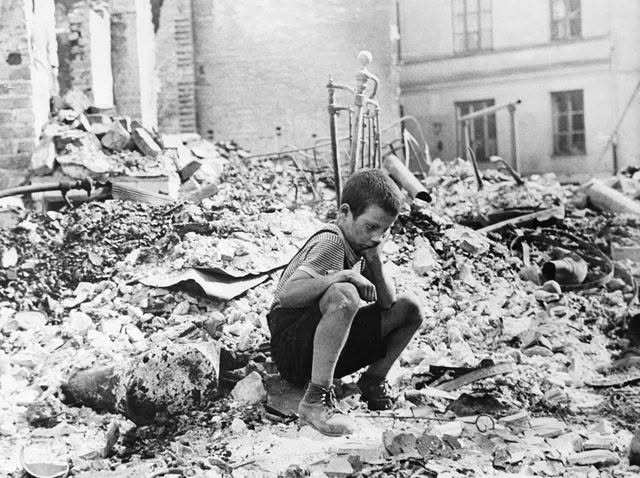
Zwierzę nie pyta, nie wnika w treść,
wystarczy mu pożyć, coś zjeść, gdzieś wejść.
Nie snuje marzeń, nie tworzy planów,
nie czuje w sercu tysiąca stanów.
Nie zna tęsknoty, co duszę rozdziera,
nie wie, czym lęk jest, gdy myśl się wdziera.
Żyje po prostu – jak liść na wietrze,
bez pytań o „więcej”, bez snów o „lepsze”.
A człowiek? Człowiek to inna sprawa –
w nim rośnie pragnienie, pytania, obawa.
Chce wiedzieć „po co?”, „dlaczego tak ?” –
czasem to spokój, a czasem strach..
Potrafi śpiewać z radości do Nieba,
ale i płakać, gdy sensu mu trzeba.
Gdy cel się gubi, gdy świat się wali –
wtedy się czuje najbardziej mały.
I wtedy właśnie – choć ciało w sile –
dusza opada jak liść w mogile.
Nie każdy dźwignie ten ciężar głowy,
choć serce bije, brak mu odnowy.
Zwierzę nie skoczy z klifu rozpaczy,
bo nie zna słowa, co „po co?” znaczy.
Człowiek – z darem samoświadomości –
może wpaść w cień… lub wzlecieć z miłości….

An animal does not ask, does not probe the meaning,
it is enough to live, to eat, to enter a place.
It does not dream, does not make plans,
its heart knows not a thousand states.
It does not feel the longing that tears the soul,
it does not know fear when thought intrudes.
It simply lives — like a leaf in the wind,
without questions of “more,” without dreams of “better.”

And humans? Humans are another matter —
within them grows desire, questions, anxiety.
They want to know “why?” “for what purpose?” —
sometimes it is peace, sometimes fear.
They can sing with joy to Heaven,
yet also weep when meaning is needed.
When goals are lost, when the world collapses —
that is when they feel the smallest.

And then — though the body is strong —
the soul falls like a leaf in a grave.
Not everyone can bear the weight of the mind,
though the heart beats, renewal is absent.
An animal will not leap from the cliff of despair,
for it does not know the word “why?”
A human — with the gift of self-awareness —
may fall into shadow… or soar with love…

"Agondonter"

"Agondonter"

Pamięta ciszę, z której przyszedł,
choć świat, w którym żyje,
od dawna krzyczy.

Nosi w sobie ogień sprzed czasu,
iskrę, której nie gasi noc,
światło, które znało Ojca,
zanim nauczyło się imion rzeczy.

Szukał domu pośród gwiazd i twarzy,
nie wiedząc,
że niósł go w sobie
od pierwszego tchnienia.

Słyszał Głos —
nie w burzy,
lecz w chwili,
gdy wszystko ucichło.

Nie dlatego wierzy,
że wszystko rozumie.
Wierzy,
bo nauczył się ufać.

Gdy droga znika we mgle,
stawia następny krok.
Gdy niebo milczy,
nie odwraca się.

Nie walczy mieczem.
Jego tarczą jest wytrwałość,
a orężem nadzieja.

Nie błyszczy.
Nie woła.
Jest zwsze tam,
gdzie gasną serca.

Nie widział —a uwierzył.
Nie wiedział —a zaufał.
Nie miał pewności —
a pozostał wierny.

Wędruje ku Światłu,
do Domu sprzed eonów.

Agondonter, pamięta,
skąd pochodzi.
I dlatego wie,
dokąd zmierza….

He remembers the silence from which he came,
though the world in which he lives
has long been shouting.

He carries within him a fire older than time,
a spark no night can extinguish,
a light that knew the Father
before it learned the names of things.

He searched for home among stars and faces,
not knowing
he had carried it within himself
since his very first breath.

He heard the Voice—
not in the storm,
but in the moment
when everything fell silent.

He does not believe
because he understands everything.

He believes
because he has learned to trust.

When the path disappears into the mist,
he takes the next step.
When heaven is silent,
he does not turn away.

He fights with no sword.
His shield is perseverance,
and his weapon is hope.

He does not shine.
He does not call attention to himself.
Yet he is always there
where hearts are growing dim.

He did not see—
yet he believed.

He did not know—
yet he trusted.

He had no certainty—
yet he remained faithful.

He journeys toward the Light,
toward the Home before the ages.

An Agondonter ..remembers
where he comes from.

And therefore knows
where he is going…

Filozofia

Trzy filary myśli

I

Prawda

Prawda jest spójna, choć nasze umysły ją fragmentują. Nie szukam ostatecznych odpowiedzi — szukam pytania, które samo jest odpowiedzią. W Księdze Urantii czytam: „Prawda jest żywym i elastycznym czynnikiem w filozofii wszechświata.”

II

Piękno

Piękno to nie dekoracja — to struktura rzeczywistości. „Najwyższe piękno to dramat zjednoczenia ogromu kosmicznych skrajności Stwórcy i stworzenia.” W wierszu szukam tego zjednoczenia, tej symetrii, która przebija przez chaos.

III

Dobro

Dobro nie jest abstrakcją — jest doświadczeniem. „Cała autentyczna dobroć jest zarówno prawdą jak i pięknem.” Kiedy piszę, pytam siebie: czy te słowa służą? Czy prowadzą ku światłu, czy ku ciemności?

Odkryj Księgę Urantii
Kontakt

Pozostańmy w komunii

„Ojciec chce, żeby wszyscy stworzeni znaleźli z Nim osobistą komunię. Droga jest otwarta dla każdego z nas."

kontakt@beatapason.pl
Instagram Facebook Wydawnictwo